Updates.

·

Used Equipment as a path to research

Starting up a lab can be very expensive. Equipment for optics research can easily exceed 5 digits, and to get running, you want to have a few tools at your disposal. At the same time, university is often a place where a lot of funding is also spent unwisely. Companies are happy to take public grant money, and price competition is low. Something I discovered in the US is how used equipment makes many startups fly and sometimes even speeds up time to experiment, because you do not have to wait for lead time.

Spending public money on used equipment is something I like, and something I want to use heavily in my research. Equipment should not be dead after 10 years. Students should understand their equipment well enough to also use used equipment. A lot of people on X (originally Twitter) show how they make their homelabs run on used equipment. Luckily, the days of building a full laser are over, but understanding an old laser, refurbishing it, or making it run again is something a student nowadays should know how to do.

The challenges, of course, are that the used equipment market is much smaller in Europe, German customs is a mess, and one regularly has the feeling that they are just trying to protect German companies. Universities really do not like to buy from eBay here or pay upfront. My first acquisitions were a few pulsed lasers (femto- and nanosecond), SPADs, and optical circulators.

If you are selling or donating used (but good) equipment for nano-fabrication or optics for a reasonable price in Europe, please reach out.
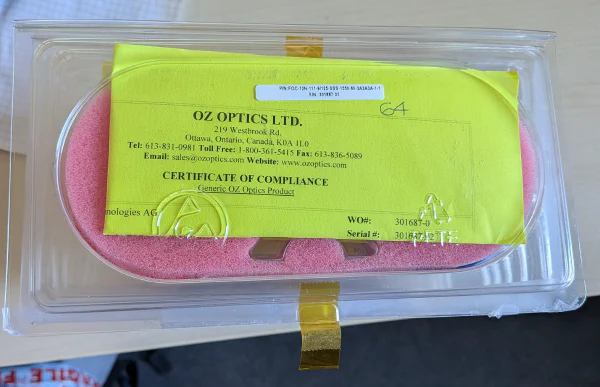
Bulk circulators in a lab setup.

Used optical circulators we acquired for the lab.
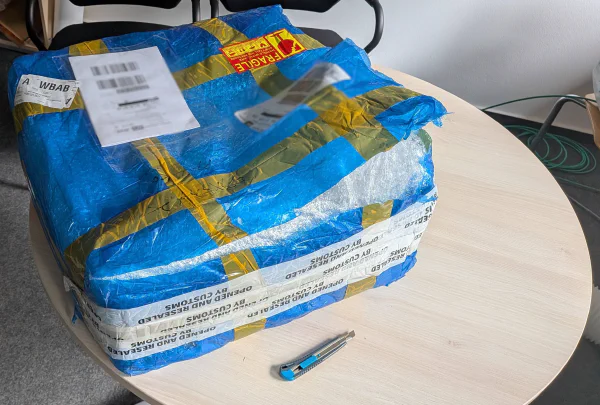
Laser equipment being handled during customs and transport.

Laser equipment arriving from abroad.
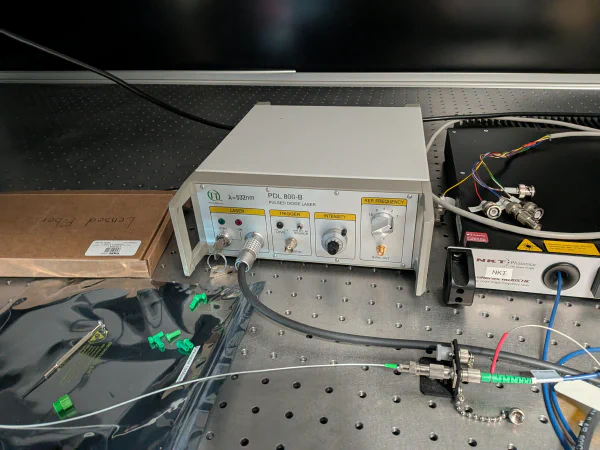
Nano-second pulsed laser on an optical table.

Pulsed lasers, now in our lab.
#equipment #lab startup
·

ECIO 26 - Zurich

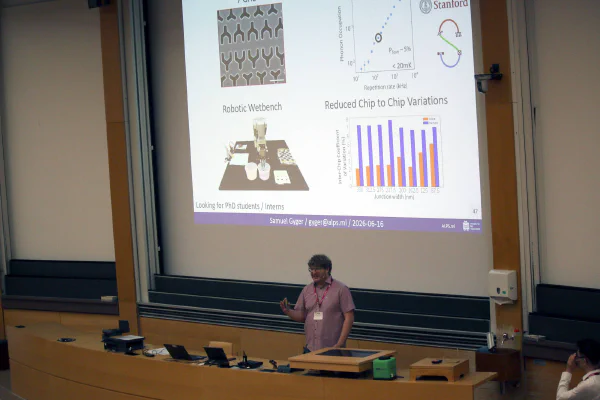
Samuel Gyger presenting the Summary slide

ECIO 2026, presenting in Zurich. Copyright ECIO 2026.

This week, Samuel attended the ECIO 26, the European Conference on Integrated Optics. The conference has grown a lot since Samuel last attended in 2019. It was great to be back in Zurich, to see the old lecture halls, and meet a lot of great people that shaped my career.

Samuel talked about the work out of the LINQS Lab in Stanford, »Integrated Optomechanics for Quantum Transduction«. He gave an overview of the field and the progress we made in the last years. As usual, he finished by discussing our work to get robots into nanofabrication. Next edition, in 2027 in Copenhagen.

#ECIO #OPTICA #conference
·

First PhD student started!

This week, our first PhD student started. Moritz is going to work on understanding automation and automated discovery in optical systems, with a focus on integrated photonics. We are excited about what lies ahead for our lab. This is the beginning as we set up our lab infrastructure.

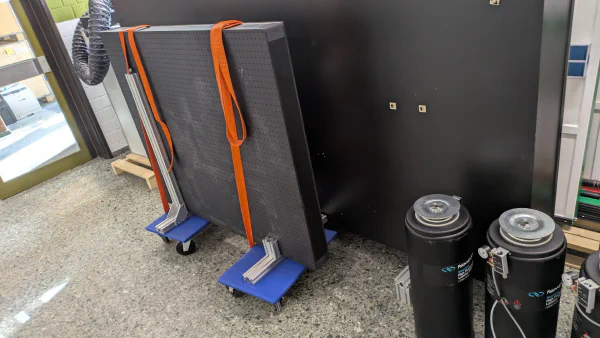
Upright optical table in the hallway.

Moving optical tables across campus.

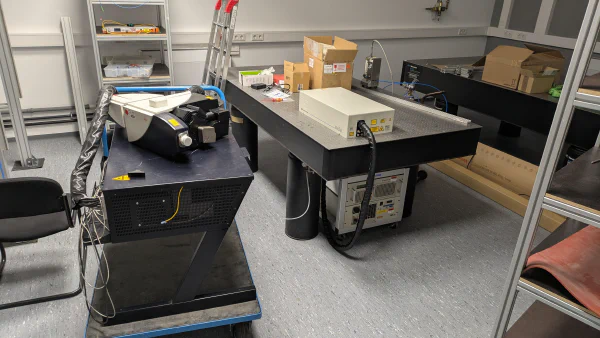
Optical table with pulsed laser on top.

Our optics lab is growing, with our pulsed laser having arrived.

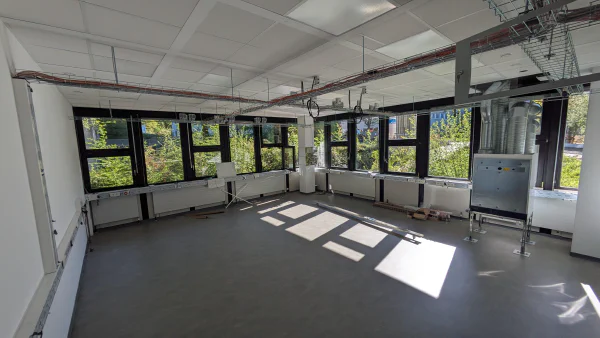
A look into an empty lab.

Our space to explore automatic operation of optical labs is still empty.

#lab startup #students
·

DPG Springmeeting - AMO & Photonics - Mainz

This week, Samuel attended the DPG Frühjahrstagung, a German national conference where physics-related academics meet in three cities over a month. ALPS went to Mainz to attend the DPG Spring Meeting of the Atomic, Molecular, Quantum Optics and Photonics Section. Mainz is a little over two hours from Saarbrücken by direct train, through beautiful scenery.

Samuel gave a talk titled »Heterogeneous Quantum Photonics: A Platform for Quantum Sensing, Networking, and Transduction« about the future of heterogeneous integration of multiple photonic building blocks to allow for small-scale exploration. He talked about our results from integrating multiple materials to allow new experiments in photon detection and transduction, as well as our recent efforts to use robotics in nanofabrication. The next edition will be held in Hannover in 2027.

#DPG #conference
·

GRC 2026 - Mechanics

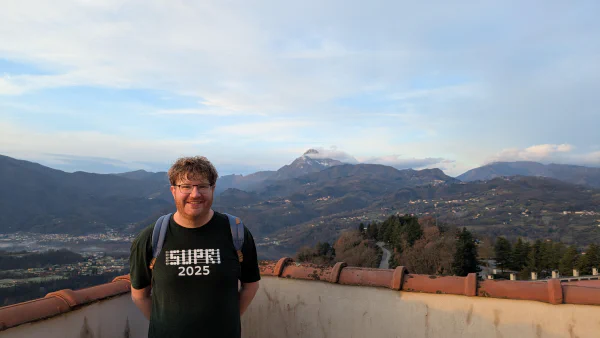
View of the Apuan Alps in northern Tuscany

Apuan Alps, northern Tuscany

Last week, Samuel attended the lab’s first conference: GRC Mechanics (»Mechanical Systems in the Quantum Regime«), with the theme »Connecting Quantum Systems with Phonons«. Hosted in beautiful Tuscany, the week focused on recent developments in the field. Held biennially and alternating between the US and Europe, it’s a must-visit conference. Looking forward to 2028 in Ventura, CA.

Samuel gave a talk about our progress at the LINQS Lab at Stanford titled »Piezo-Driven Optomechanics: Toward Two-Fridge Entanglement and Robotic Assistance«. He talked about the state of our experiments in microwave-to-optics transduction and our recent efforts to use robotics in nanofabrication.

#grc #conference
·

We landed!

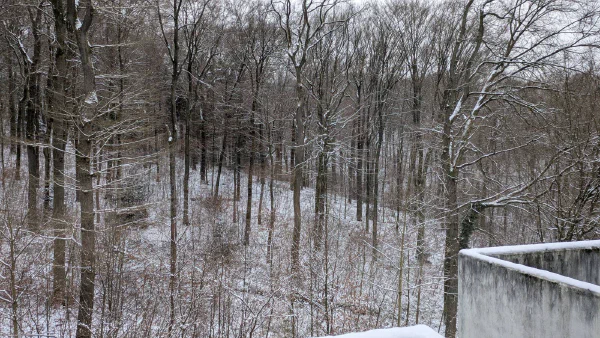
The lab has officially started, and ALPS was welcomed with snow in the Saarland.

A few renovations still have to happen, but I am optimistic that April can be a realistic start in my new lab rooms. Currently we have offices for PhD students. We decided on some more plans for the lab layout with the technical support here.

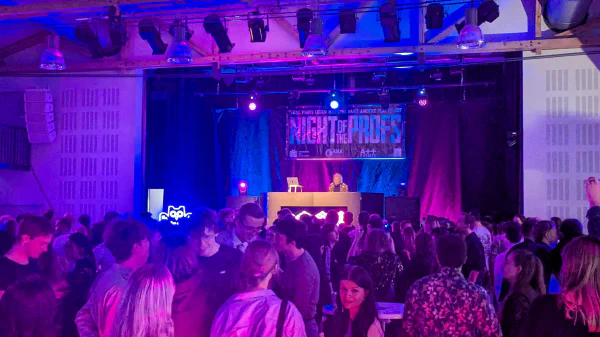
For the first two weeks, we visited the other must-see sights here: the Saarschleife, Völklinger Hütte, and Luxembourg. We ended with the Night of the Profs, a party where professors DJ.

Snowy landscape in Saarland

Snow welcoming ALPS to the Saarland

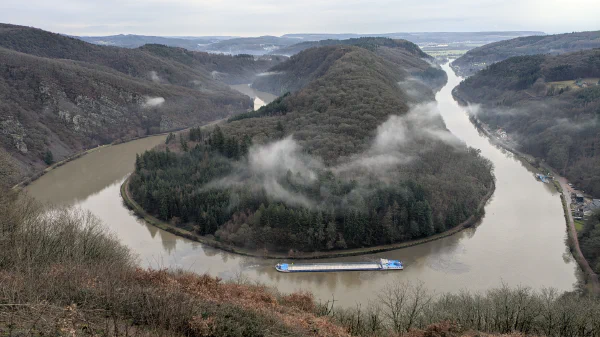
View of the Saarschleife

The famous Saarschleife, one of the must-see sights in the region

Night of the Profs event

Night of the Profs: Where Saarland professors become DJs

#lab startup #local life
·

ALPS lab is coming to the Saarland!

In January 2026, it is time to say goodbye to California and hello to the Saarland! We will be based in Saarbrücken, Germany, at Saarland University, and will be working on a variety of research projects in quantum emitters, integrated photonics, and robotics.

I am curious to explore how we can do research in 2026 with robots taking a hand in the process. We are thinking of using them for nanofabrication, but also for configuring optical setups and loading new spectroscopy samples into the cryostat. For robotics, we are interested in conventional control as well as recent advances in robotic control.

We are looking for more reliable measurement and fabrication results, more data without more hours in the lab, and to move mundane tasks onto the shoulders of robots.

I am looking for 2 PhD students, starting around April 2026.

If you want to do a master’s thesis, are interested in looking into a PhD, or test the waters of academic research with an internship, please reach out.

#lab startup #Integrated Photonics #Quantum Emitters #Quantum Communication #Robotics
·

We are online!

More updates should be coming in the next months. For now, visit our lab in Saarbrücken after January 2026.